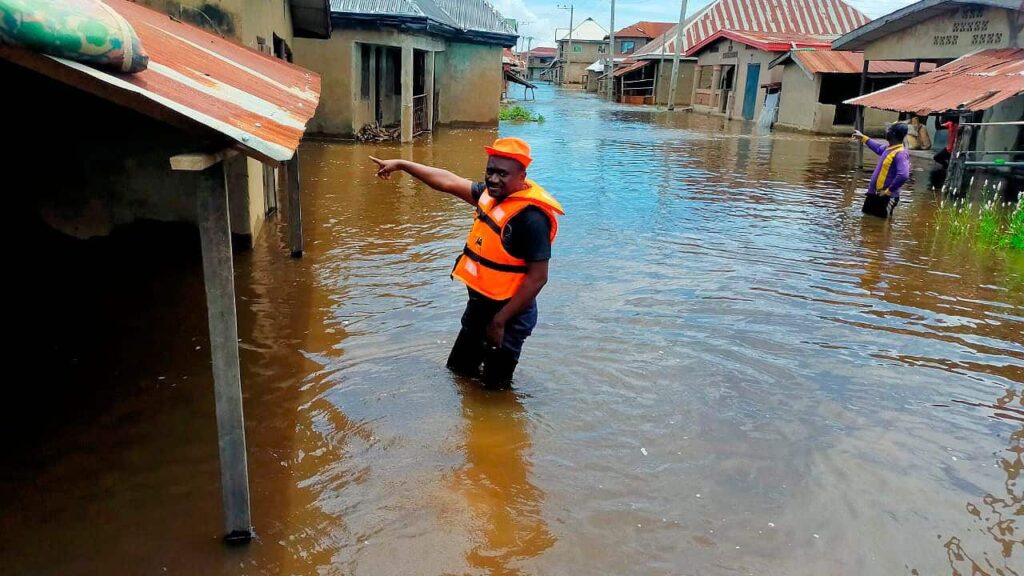
The Federal Government has identified 3,520 farmers across Kogi State whose farmlands and livelihoods were severely devastated by flooding during the 2026 rainy season.
Executive Secretary of the National Agricultural Development Fund, NADF, Mohammed Ibrahim, disclosed the figure, noting that the floods destroyed crops and crippled agricultural activities across affected communities.
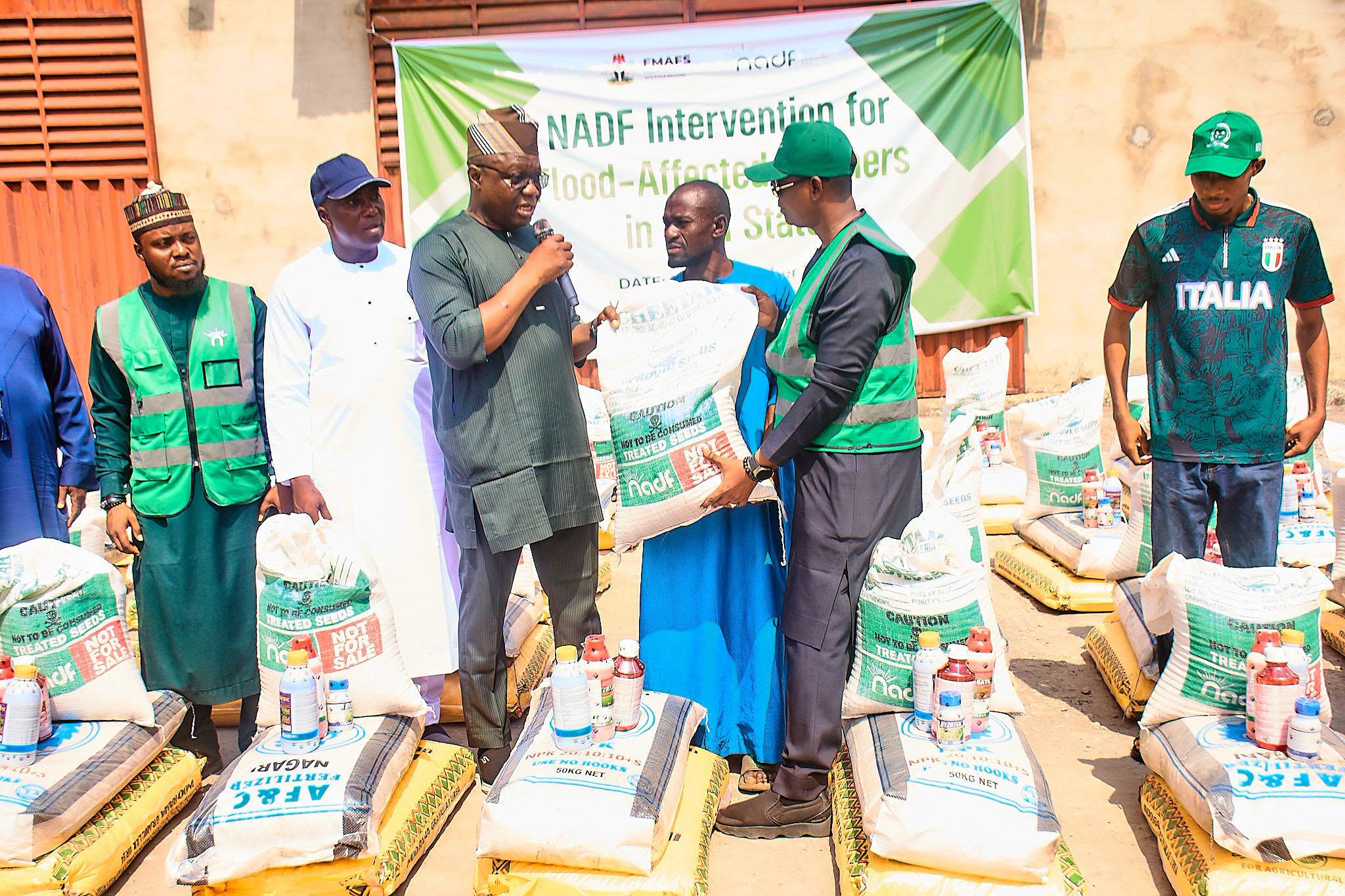
To cushion the impact, the Federal Government has rolled out an intervention programme aimed at helping the victims reclaim their farmlands, rebuild their businesses, and return to active cultivation.
Leading a federal delegation to Lokoja on Tuesday on behalf of Ibrahim, Muhammad Gidado emphasized the urgency of delivering timely relief to boost food production in the state.
Under the relief package, beneficiaries will receive urea and NPK fertilisers, 15kg bags of rice seeds, insecticides, as well as pre-planting, pre-emergence, and early post-emergence agrochemicals.
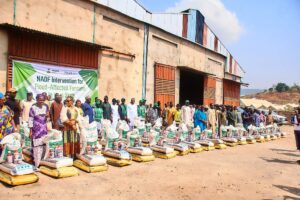
Gidado noted that the distribution reflects the administration’s commitment to farmers’ welfare and agricultural resilience, adding that the inputs are specifically designed to “help affected farmers recover from the devastating effects of flooding, resume production and contribute to national food security.”
He urged the Kogi State Government, traditional rulers, and local stakeholders to guarantee a transparent and hitch-free distribution so the supplies reach only the verified victims.
The NADF representative also advised the beneficiaries to put the farm inputs to proper use rather than diverting them, ensuring the programme achieves its intended harvest targets.
In his remarks, the Kogi State Commissioner for Agriculture and Food Security, Timothy Ojomah, applauded President Bola Ahmed Tinubu, the Minister of Agriculture and Food Security, Senator Abubakar Kyari, and the NADF leadership for prioritizing the state.
Ojomah assured the delegation of the state government’s readiness to collaborate closely with federal officials to oversee an equitable rollout to all affected farming communities.