Abdulsalam Hammad
US President Donald Trump on Wednesday, November 25, fired a new tariff salvo on 14 major trading partners, including China, the European Union, India, Japan and Brazil, undeterred in his protectionist push by losses his Republican party suffered in US midterm elections.
The Trump administration announced the proposed tariffs after an eight-month investigation by the Office of the US Trade Representative, USTR into what Washington calls “structural excess capacity” countries promoting production divorced from demand through subsidies and other industrial policies, flooding world markets with cheap goods.
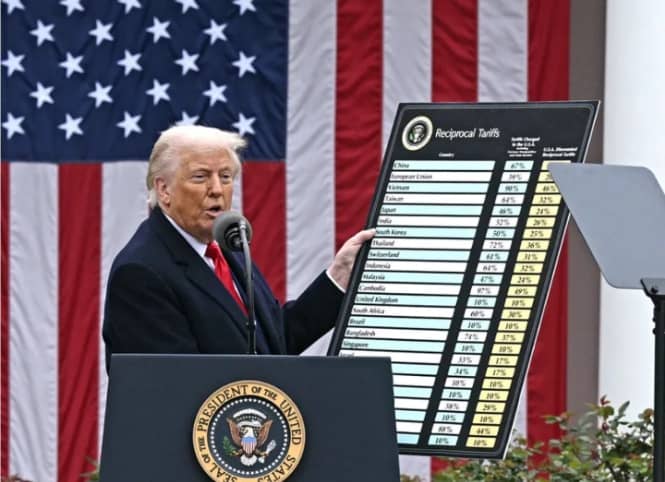
The tariffs are Trump’s latest attempt to rebuild his sweeping “Liberation Day” tariffs he announced in April 2025, which the US Supreme Court struck down in February 2026 for bypassing Congress.
This time, Trump is using Section 301 of the Trade Act of 1974, which allows Washington to penalise countries it determines are treating US businesses unfairly.
In a separate announcement, USTR also proposed a 10% tariff on Brazil’s Embraer aircraft and higher duties on raw and refined sugar, after talks stalled. Brazil expressed strong indignation.
Trump has rebuilt his tariff wall this time through Section 301 instead of emergency powers. The duties will not take effect until after a January 25 public hearing and public comment, and could still change through negotiations.
For now, the world is bracing for a fresh trade war with China at 20% (potentially 40%), the EU at 15% (potentially 20%), and American consumers already feeling the pinch at the checkout.