The Nigeria Labour Congress, NLC and the Trade Union Congress, TUC of Nigeria have ended their public disagreement over the Federal Government’s N70,000 six-month transport allowance for workers.
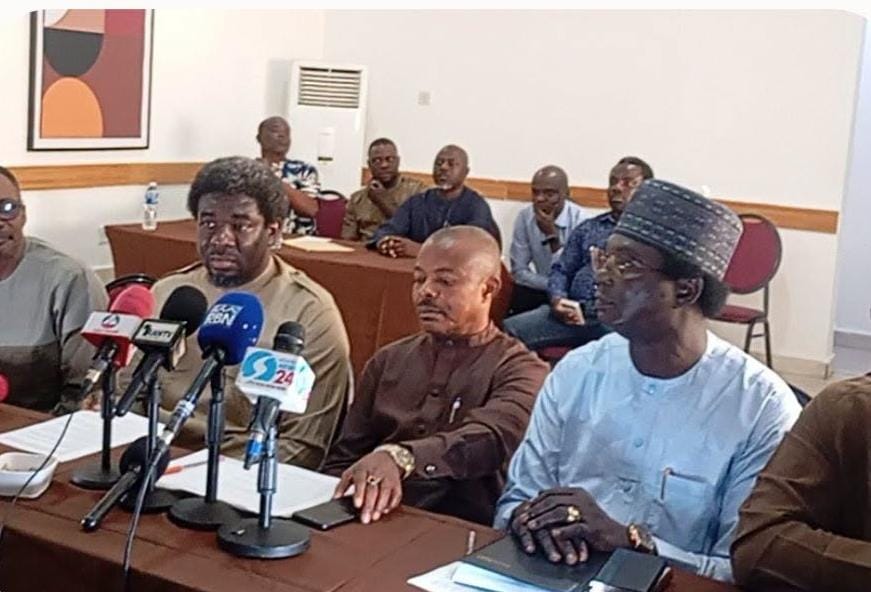
Both unions announced the truce on Wednesday at a joint press conference in Abuja, stating they chose to bury their differences for the sake of Nigerian workers.
In a joint statement signed by NLC President Joe Ajaero and TUC President-General Festus Osifo, the labour centres admitted their dispute played out publicly but stressed that their duty to workers outweighs institutional friction.
They described the row as a family misunderstanding that was settled peacefully after former leaders of both unions stepped in.
The statement read, “The unity of the Nigerian working class is far greater than any disagreement between leaderships. Our common struggle, shared history, and collective responsibility to defend workers’ rights must never be sacrificed on the altar of misunderstanding or institutional differences.”
Trouble started over the N70,000 transport allowance approved by President Bola Tinubu for workers across government tiers for six months, escalating when Ajaero and Osifo clashed on Channels Television’s The Morning Brief over who holds the mandate to negotiate with Abuja.
During the broadcast, Ajaero insisted the NLC could negotiate alone under International Labour Organisation rules, noting, “TUC can negotiate along with NLC, but NLC can negotiate alone based on the principle of most workers’ representatives of the ILO.”
Osifo dismissed the N70,000 deal announced by Ajaero as an aberration because the TUC was excluded from the talks, challenging him to cite the exact ILO rule allowing one centre to speak for another.
He stated, “He should show me in the ILO Regulations where it says one party is going to negotiate without the other one being there or consulted. He should show me! He should show Nigerians! ILO doctrine is that when you have more affiliates, and you are going for one of their events, it is not correct that the most represented will go and negotiate on behalf of the other one when the unions have their own umbrella. There is nowhere in ILO regulations that says a trade centre cannot negotiate for its members. It is not there! It is just that if you are going to the ILO, it is tripartite- the labour, government and the employers.”
Rejecting the idea that having more affiliates gives the NLC sole negotiating power, Osifo added, “But what we are saying is that you have about 60 affiliates while we have about 40. You cannot! You cannot negotiate for a body that is represented, for a body that has a trade union. You cannot negotiate on their behalf! It is not there anywhere! Yes, if we go to negotiations- I sit down, you sit down, and we agree”.
Ajaero countered by pointing to voluntary unionism under Nigerian law, stating, “The 2005 Trade Union Amendment Act made membership of trade unions voluntary. It is the worker who determines the union he belongs to. Section 40 of the Nigerian 1999 Constitution, as amended, was clear that every Nigerian worker has the right to belong to any trade union, political or religious institution of his choice, which gives every worker the latitude to belong to any union of their choice.”
The NLC leader also disputed Osifo’s claim of strong federal civil service membership, noting that seven of the eight bodies in the Joint National Public Service Negotiating Council belong to the NLC while the lone TUC affiliate already ceded its negotiating power to the council.
Despite Ajaero’s argument, Osifo had maintained throughout the feud that both labour centres must sit at the table whenever the welfare of their respective members is being negotiated.