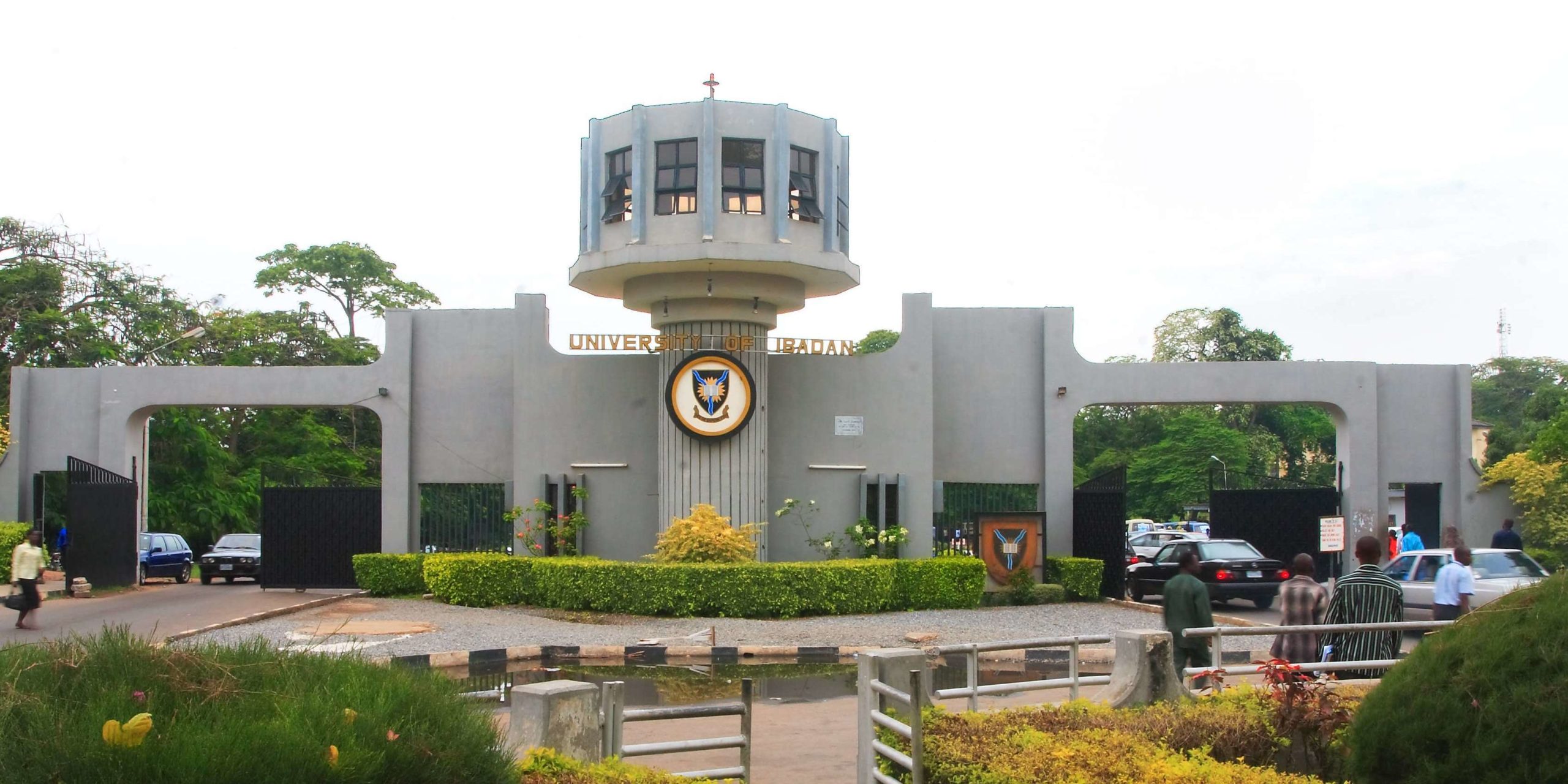
The Federal High Court sitting in Ibadan, Oyo State, has ordered the University of Ibadan management to reinstate three students suspended over protests against tuition fee hikes.
The ruling was delivered by Justice Nkeonye Maha during a court session held in the state capital on Wednesday.
The affected students are Aduwo Ayodele, Mide Gbadegesin, and Nice Linus.
They were suspended on July 14, 2025, after protesting a fee increase approved by the university’s governing council.
The protests reportedly began at midnight following a circular issued by the council’s secretary, G.O. Saliu.
The circular stated that the council had “considered the reviewed schedule of levies for newly admitted and returning undergraduate students in the 2023/2024 academic session and approved it as recommended by the university Senate.”
It further added, “Consequently, students who are yet to pay and complete their registration exercises are advised to do so on or before Wednesday, September 4, 2024, to enable departments to download lists of registered students in preparation for the first semester examination.”
The suspended students later filed a suit, arguing that their suspension violated their fundamental human rights and seeking to overturn the disciplinary action.
They also challenged the disciplinary process, alleging that they were denied fair hearing during proceedings of the university committees.
Among their reliefs, they asked the court for “A declaration that the refusal during the sittings of the 1st Respondent’s Student Disciplinary Committee and the Central Student Disciplinary Committee to allow the Applicants call witnesses and present video footage of what transpired on 13th of May, 2024, constitutes egregious infringement of the Applicants’ right to fair hearing guaranteed under Section 36 of the 1999 Constitution of the Federal Republic of Nigeria as amended.”
They also sought “AN ORDER SETTING ASIDE in its entirety the 1st Respondent’s Central Student Disciplinary Committee’s decisions dated 14th of July, 2025 to wit; rusticating the 1st and 2nd Applicants for four semesters, mandating them to write an undertaking of good behaviour, not to meddle with Student Union matters and to undergo mandatory professional counselling at the 1st Respondent’s Career Development and Counselling Centre, being decisions reached in proceedings bereft of fair hearing and natural justice.”
The applicants further demanded “AN ORDER OF THE HONOURABLE COURT forthwith reinstating the Applicants’ full studentship rights and privileges within the 1st Respondent with immediate effect to wit, attend lectures, write examinations and participate in student union activities for the advancement of their lawful interest.”
They also prayed for “AN ORDER OF PERPETUAL INJUNCTION restraining the Respondents whether by themselves or through their agents from further subjecting the Applicants to the 1st Respondent’s Student Disciplinary Committee and or the Central Student Disciplinary Committee on account of the exercise of their rights to freedom of thought and expression guaranteed under the 1999 Constitution of the Federal Republic of Nigeria as amended.”
The suit also included a demand for damages, stating “The sum of N20m damages jointly and severally against the Respondents for the infringement of the Applicants’ constitutionally guaranteed rights to dignity of their human person, personal liberty, fair hearing, freedom of thought, freedom of expression, peaceful assembly and association, freedom of movement, and freedom from discrimination guaranteed under the 1999 Constitution of the Federal Republic of Nigeria as amended. EXEMPLARY DAMAGES of N5m personally against the 2nd Respondent for flagrant disregard of the law and constitutional provisions of the cherished principles of natural justice.”
Delivering judgment, Justice Maha held that the university violated the students’ rights by denying them fair hearing during disciplinary proceedings.
She therefore ruled, “I hereby set aside the decision of the Disciplinary Committee and order the reinstatement of the suspended students.”
Reacting to the judgment, the Corporate Accountability and Public Participation Africa (CAPPA) commended the court’s decision and urged immediate compliance by the university.
The group also demanded a formal apology, stating that the institution must “reinstate the students and tender a full, unreserved apology to the trio for its deplorable conduct.”
CAPPA further added, “The judgment strongly affirms students’ constitutional rights to freedom of thought and expression, as guaranteed under Sections 38 and 39 of the Constitution of the Federal Republic of Nigeria, 1999 (as amended).”
It also referenced allegations made in court, noting that students said they were assaulted and handed over to security operatives after being removed from a gathering.
“The court’s decision sends an unequivocal message to the University of Ibadan and other oppressive academic institutions nationwide that tyranny and the use of authoritarian tactics to stifle legitimate dissent is unlawful, unacceptable and will not stand,” said Zikora Ibeh, CAPPA’s Assistant Executive Director.